Answer Engine Optimization (AEO) is the practice of structuring your website content, schema markup, and entity relationships so that AI engines like ChatGPT, Perplexity, and Google AI Overviews cite your brand when answering buyer questions.
That is the definition. Here is the reality most brands are missing: AI engines have become the first research touchpoint for a significant and growing share of buyers. When a VP of Engineering types “best observability platform for early-stage SaaS” into ChatGPT, they do not get ten links to compare. They get one synthesized recommendation with cited sources. If your brand is not in that answer, you do not exist for that buyer at that moment.
AEO is the practice of building the foundation that gets you into those answers consistently.
I have been building this for brands across 4 continents since 2022, working as an AEO specialist with B2B SaaS founders in the US, UK, EU, and Australia. The playbook here comes from actual implementation work across health tech, logistics SaaS, professional services, and B2B tools. Not from theory.
Why AI search changed the game
The shift happened faster than most marketing teams noticed.
In 2024, Perplexity processed over 500 million queries. ChatGPT crossed 100 million daily active users. Google rolled out AI Overviews to over 1 billion searches per month. These are not experiments. They are the primary interface through which a growing share of research-mode buyers now discover solutions.
The behavioral shift is the critical part: traditional search gives buyers a list. They compare, click, decide. AI search gives buyers a synthesized answer with cited sources. The buyer reads the answer, trusts the cited brand, and often arrives at that site already partially convinced. The comparison stage happens inside the AI engine, invisible to everyone who is not cited.
For B2B SaaS specifically, this is the most significant shift in buyer research behavior since personalized search results arrived. The brands positioned as trusted sources inside AI engines are winning the discovery moment. Brands that show up only in traditional search are being bypassed before the buyer reaches the search results page.
What AEO actually is: mechanics, not marketing
AEO is not SEO renamed. It operates on different signals, requires different technical implementation, and produces different outcomes. Understanding the actual mechanics is what separates brands that build it correctly from brands that add schema tags and wonder why citations do not appear.
How AI engines decide what to cite
Every AI engine has its own training data, retrieval architecture, and citation policy. But three signals consistently predict citation across all of them:
Entity recognition. AI engines build knowledge graphs. If your brand is not a recognized entity in that graph, with consistent signals about who you are, what you do, and who you serve, you are noise to the system. A correctly implemented Person or Organization schema, consistent across your website and social profiles, is what tells ChatGPT and Perplexity that your brand is a defined thing with known expertise, not just a string of characters on a page.
Machine-readable answers. AI engines do not extract meaning from narrative marketing prose. They extract structured answers efficiently. FAQPage schema is the most direct path to AI citation because it wraps your Q&A content in a format AI systems are built to read and synthesize. A service page with 6 well-written question-answer pairs in FAQPage JSON-LD can start appearing in AI responses within days of being crawled.
Content the crawler can access. This is where I find the most failures in audits. A site with excellent schema and strong entity signals but a robots.txt that blocks GPTBot produces zero ChatGPT citations, regardless of content quality. Bot access is a prerequisite. Check it first with the robots.txt checker before any other AEO work.
AEO versus traditional SEO: where they actually differ
The goal is the same: make your brand visible to buyers who are researching solutions. The surface and mechanism are different.
Traditional SEO targets Google rankings. Success looks like position one through ten for a target keyword. The buyer sees your listing alongside competitors and chooses whether to click. Your brand competes in a list.
AEO targets AI engines’ citation algorithms. Success looks like your brand appearing in the synthesized answer before the buyer ever sees search results. The buyer does not compare you to competitors in a list. They read the AI’s answer and see your brand as the cited authority.
The mechanism difference is equally significant. SEO builds ranking signals through backlinks, technical factors, and on-page relevance. AEO builds citation signals through entity clarity, structured data, and answer-first content format.
Where they converge: the same deep, accurate, well-structured content that earns Google rankings also earns AI citations. Building for AEO rarely hurts SEO. The reverse is frequently true: brands optimizing exclusively for traditional search often have content that ranks but never gets cited.
The right framework is one integrated system, one build, two surfaces. I cover the full comparison in AEO vs SEO.
The five pillars of a working AEO implementation
These five pillars, done simultaneously, produce consistent citation results. Running them sequentially is slower and produces weaker outcomes.
Pillar 1: Bot access and crawlability
AI engines cannot cite content they cannot read. Open your site’s robots.txt file and verify these entries exist:
User-agent: GPTBot
Allow: /

User-agent: ClaudeBot
Allow: /

User-agent: PerplexityBot
Allow: /

User-agent: Bingbot
Allow: /

User-agent: Googlebot
Allow: /
If any of these show Disallow: /, you are blocking the AI engine at the door. No schema work or content rewriting will overcome this. It is the most common single-point failure I find in audits. WordPress security plugins, blanket bot blocks during development, and platform-generated default files are the usual culprits.
Additional crawlability checks that affect AI citation:
- Page speed: AI crawlers prioritize fast-loading pages. LCP under 2.5 seconds is the target.
- No noindex on target pages: Any page with
<meta name="robots" content="noindex">will not be crawled or cached by AI engines. - JavaScript rendering: Most AI crawlers do not execute JavaScript. Server-side rendered or static HTML is what gets indexed. If your content lives in a React client component that renders after page load, it may not be accessible to AI crawlers.
Use the robots.txt checker to audit your file without manual parsing.
Pillar 2: Entity optimization and schema markup
Entity optimization is what tells AI engines who you are. Without a recognized entity, you are an anonymous source. With one, you are an authority.
Person schema (for personal brands and founders):
{
  "@context": "https://schema.org",
  "@type": "Person",
  "@id": "https://yoursite.com/#you",
  "name": "Your Full Name",
  "jobTitle": "Specific, not generic",
  "description": "What you do. Who you do it for. The outcome you produce.",
  "url": "https://yoursite.com",
  "image": "https://yoursite.com/your-photo.jpg",
  "sameAs": [
    "https://linkedin.com/in/yourprofile",
    "https://twitter.com/yourhandle"
  ],
  "knowsAbout": [
    "Specific topic 1",
    "Specific topic 2",
    "Specific topic 3"
  ]
}
The knowsAbout array is the most consistently underused field in AEO implementations. Most teams leave it generic: “Marketing”, “Technology”, “Software”. The brands that get cited use specific, niche expertise labels that match the exact queries their buyers ask.
“B2B SaaS Churn Reduction” outperforms “Customer Success.” “AP Automation for Mid-Market Finance” outperforms “FinTech.” “Sales Engagement Software for Outbound SDR Teams” outperforms “Sales Tools.”
Be as specific as the buyer’s query. The match between knowsAbout and the actual buyer question is a meaningful citation signal.
FAQPage schema is the highest-leverage schema type for immediate citation. AI engines can extract FAQPage question-answer pairs directly and synthesize them into responses. The quality threshold for answers that get cited: start with the direct answer, include a specific number or concrete detail, keep it between 50 and 200 words, avoid hedging language.
See the full schema markup guide for complete implementation templates covering Person, Organization, WebSite, Article, FAQPage, BreadcrumbList, and Service schema types.
Pillar 3: Answer-first content architecture
This is the pillar most brands underinvest in because it requires rewriting existing content, not adding technical tags. But it is where citation volume is actually earned or lost.
AI engines extract answers. They do not extract marketing narratives. They do not extract content that builds context for three paragraphs and then arrives at the point. They extract specific, confident, directly stated claims.
What a non-citable opening looks like:
“Customer churn is a challenge facing many B2B SaaS companies today. In this comprehensive guide, we will explore the various factors that contribute to churn and examine potential strategies for addressing them…”
Nothing in that paragraph is extractable. It is not an answer.
What a citable opening looks like:
“The most reliable predictor of B2B SaaS churn is product usage: accounts using fewer than three core features in the 60 days before renewal churn at 4x the rate of active users. Catching this signal 30 days before renewal and triggering a proactive success touchpoint reduces churn by 25 to 40% in most implementations.”
That is a citable claim. It is specific. It states a conclusion with evidence. AI engines are built to extract exactly this kind of content.
Apply the answer-first format to:
- Every blog post introduction: the core answer in the first two sentences, not the fourth paragraph
- Every H2 section: the answer to the implied question stated in the first sentence under the heading
- Every FAQ answer: answer first, context second, never the reverse
- Every service page description: what you deliver, for whom, and the outcome, not “we are passionate about helping you achieve your goals”
This does not hurt readability for human visitors. Direct answers followed by elaboration works for both AI extraction and human comprehension.
Pillar 4: Topical authority depth
Single-article citations are rare and rarely compound. Sustained AI citation presence comes from topical authority: a cluster of deeply interconnected content that covers one topic comprehensively.
The math: a site with 25 interconnected posts covering sales engagement software completely outperforms a site with 250 scattered articles across 20 general marketing topics for every AI citation metric that matters.
This is counterintuitive if you are thinking about raw traffic volume. It is entirely logical if you think about how AI engines evaluate trustworthiness. They ask: which source has answered every meaningful question in this domain? The source that has is the one that gets cited.
Content formats that accelerate topical authority:
Original benchmark data you collected or analyzed performs best. A sentence like “Our analysis of 150 B2B SaaS companies found…” is a citation magnet. Other publishers reference it. AI engines cite it. The same data point gets referenced across multiple posts, each building authority back to the source.
Comparison tables with specific values get extracted directly by AI engines for comparison queries. Five options with four data columns outperforms three paragraphs describing the same information for citation rate.
Step-by-step process guides with numbered steps and one specific action per step get synthesized cleanly for how-to queries. Numbered processes are a format AI engines are built to read.
The full cluster playbook, including how to sequence publication, build internal links, and map buyer questions to content topics, is in the topical authority cluster playbook.
Pillar 5: Freshness and consistency signals
AI engines update on cycles. Perplexity crawls continuously. ChatGPT’s training data refreshes on a schedule. Google’s Gemini model reads fresh content. Brands that publish once and wait lose citation presence as the content ages and competitors build newer, more specific content.
The minimum viable freshness cadence:
- Update key pages quarterly with new statistics or examples
- Refresh
dateModifiedin Article schema when updates are made - Publish new cluster posts on emerging buyer questions in your niche
- Monitor and respond to new questions your buyers are asking AI engines
The brands I work with that maintain this cadence sustain AI citations for 18 to 24 months. The brands that publish once and stop typically see a citation drop starting at month 4 to 6.
What a complete AEO implementation looks like
Here is an example from actual client work. A health technology company in the US market had strong Google rankings but zero AI citation presence. Buyers were using ChatGPT to research health tech solutions. The brand was invisible in that channel.
The implementation in sequence:
Week 1: Technical access and audit
- robots.txt audit: GPTBot was allowed, but PerplexityBot and ClaudeBot were not explicitly listed. Added explicit Allow rules for all three AI crawlers plus Bingbot.
- Page speed check: LCP was 3.8 seconds on mobile. Image optimization and font loading changes brought it to 2.1 seconds.
- Crawl audit: 4 key service pages had noindex from a legacy staging environment configuration. Removed.
Weeks 1 to 2: Entity schema build
- Person schema for the founder with specific
knowsAboutvalues matching buyer query language - Organization schema with
areaServedand service line coverage - WebSite schema on every page
- Service schema for each service line
All deployed as a single @graph JSON-LD block in the site <head>.
Weeks 2 to 3: FAQPage deployment
- Identified the 30 most common buyer questions from sales call notes and support tickets
- Wrote 6 to 8 answer-first Q&A pairs per service page
- Deployed as FAQPage JSON-LD. Schema validated to zero errors before launch.
Weeks 3 to 6: Content restructure
- 12 existing blog posts rewritten in answer-first format. Introduction paragraphs rewritten to lead with the direct answer. Section openings rewritten to state the answer in the first sentence.
- 25 new cluster posts published targeting specific question formats buyers used in AI engines, organized into a pillar-cluster architecture with complete internal linking.
Week 6: Distribution and monitoring
- XML sitemap submitted to Google, Bing, and IndexNow
- Server logs monitored for GPTBot, ClaudeBot, and PerplexityBot crawl activity
- Manual AI citation monitoring initiated: 20 target queries tracked across ChatGPT, Perplexity, and Google AI Overviews
Results within 90 days:
- 20+ tracked AI citation appearances across ChatGPT and Perplexity
- Impressions grew from 94.8K to 300K year over year
- First citation appeared within 22 hours of cluster launch on one specific article
That 22-hour figure is the fastest citation I have tracked personally. It was on a domain with established entity recognition and correct bot access. Plan for 30 to 90 days for most brands.
The implementation varies by industry and starting point. The pillar sequence does not.
The AEO mistakes I see most often in audits
Mistake 1: Schema without bot access. Technically perfect JSON-LD on a site that blocks GPTBot. The schema is unread. The citation potential is zero.
Mistake 2: Vague FAQPage answers. “It depends on your specific situation” is not a citable answer. AI engines pass on vague, hedged content. Specific, confident, numerical answers get extracted. “60 to 90 days for most implementations” gets cited. “Results vary” does not.
Mistake 3: One cluster post, expecting consistent citations. A single excellent article produces occasional citations. The topical authority threshold requires 15 to 25 interconnected posts for sustained citation presence. One post is not a cluster.
Mistake 4: One-time implementation. Schema deployed, content published, nothing for six months. Citations appear, peak, and decline as content ages. AEO is a maintenance discipline, not a one-time project.
Mistake 5: Entity inconsistency. Name spelled differently across LinkedIn, the website, and press mentions. Job title varies. Location data inconsistent. AI engines pick up these inconsistencies and reduce entity confidence scores. Consistency across every crawlable touchpoint matters more than most teams realize.
Mistake 6: Only optimizing for one AI engine. ChatGPT, Perplexity, Google AI Overviews, Claude, and Microsoft Copilot each have different citation patterns and knowledge update cycles. A complete AEO implementation addresses all five, not just the one with the highest market share at this moment.
How to check your AEO standing right now
Three tests, available immediately:
Test 1: Open ChatGPT and type the core question your buyer asks when researching your category. Is your brand in the response? If not, you have a measurable AEO gap.
Test 2: Open yoursite.com/robots.txt. Confirm GPTBot, ClaudeBot, and PerplexityBot are explicitly allowed. This takes 30 seconds.
Test 3: Open Google’s Rich Results Test and enter your homepage URL. Count the schema types detected. If fewer than three, your schema layer is incomplete.
Or use the AI Visibility Score tool, which walks through 10 structured audit questions and returns a score with specific action items.
How AEO fits into a complete visibility strategy
I approach AEO as part of an integrated visibility system that covers AI search, traditional SEO, and AI-visible web design. The three disciplines share infrastructure: the same schema layer, the same content architecture, the same technical crawlability foundations.
Building them separately is slower and more expensive than building them from one integrated architecture.
The brands I work with are predominantly US and UK B2B SaaS companies with paid acquisition spend and a CAC they want to reduce. AI citation is the highest-leverage organic channel for early-stage buyer touchpoints. SEO architecture is the compound-growth channel for mid-to-late funnel queries. AI-visible web design is the technical foundation that makes both possible from day one.
The full AEO service and implementation process covers how this works in an engagement context.
Timeline: what to expect and when
AEO is not instant. These are realistic windows based on actual implementation data:
| Phase | What is happening |
|---|---|
| Week 1 to 2 | Technical fixes: robots.txt, schema implementation, crawlability audit |
| Month 1 | Entity schema live, first batch of answer-first content published |
| Month 2 to 3 | First AI citations appear. Perplexity typically moves faster than ChatGPT. |
| Month 4 to 6 | Consistent citation presence for core topic cluster |
| Month 6 to 12 | Compounding: AI engines cite you for tangentially related queries |
| Month 12+ | Brand recognition established: new content earns citations within weeks |
For domains with existing domain authority and established entity recognition, some of these timelines compress significantly. The 22-hour citation is an example of what happens when all pillars are already in place and a new authoritative piece is published.
For new domains, add two to three months across the board.
Every month you delay is a month competitors are accumulating entity recognition and topical authority you will need to catch up to later.
Related reading
- AEO vs SEO — one system, two surfaces: why you need both and how they share infrastructure
- ChatGPT citations — the step-by-step technical implementation guide
- schema markup for AI search — every schema type that matters, with implementation examples
- topical authority for SaaS — the content architecture that sustains citations over time
- Google AI Overviews — the Google-specific layer of AEO
- AEO strategy — how I build AI visibility systems for B2B SaaS brands
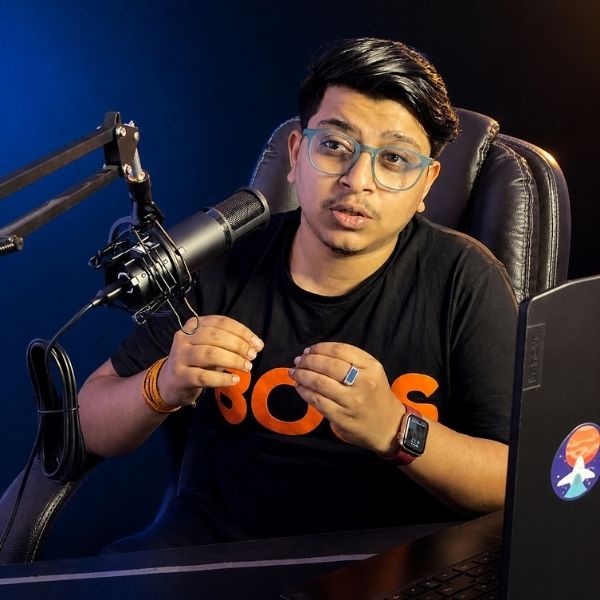
Shivam Attri is an AEO specialist and SEO strategist who builds AI search visibility for B2B SaaS founders globally. The fastest citation he has tracked: 22 hours from launch. Start with an audit.
Common questions,
direct answers.
01 What is AEO and how is it different from SEO?
AEO (Answer Engine Optimization) is the practice of structuring content, schema, and entities so AI engines like ChatGPT, Perplexity, Claude, and Google AI Overviews cite your brand when answering buyer questions. SEO targets ten blue links. AEO targets the synthesized answer the AI gives before a user clicks anything.
02 How long does AEO take to show measurable results?
Most brands see initial AI engine citations within 30 to 60 days of implementing JSON-LD entity schema, FAQPage markup, and answer-first content rewrites. Compounding citations typically arrive between days 60 and 120 as topical authority accumulates across queries.
03 Which AI engines does AEO actually optimize for?
AEO targets ChatGPT, Perplexity, Google AI Overviews, Claude, Microsoft Copilot, and Grok. Each engine weights signals differently. Google prioritizes E-E-A-T and structured data, ChatGPT prioritizes domain authority and freshness, Perplexity prioritizes semantic relevance, Claude indexes through Brave Search.
04 Do I need to drop SEO to do AEO?
No. The same content cluster that earns Google rankings earns AI engine citations. The same schema layer that powers rich results powers AI Overviews. One build, two outcomes. Most consultants do only one. The compounding result comes from running both surfaces from one architecture.