
Google just started showing you how your TikToks rank.
Not your website. Your TikTok. Your Instagram. Your YouTube. Your posts on X.
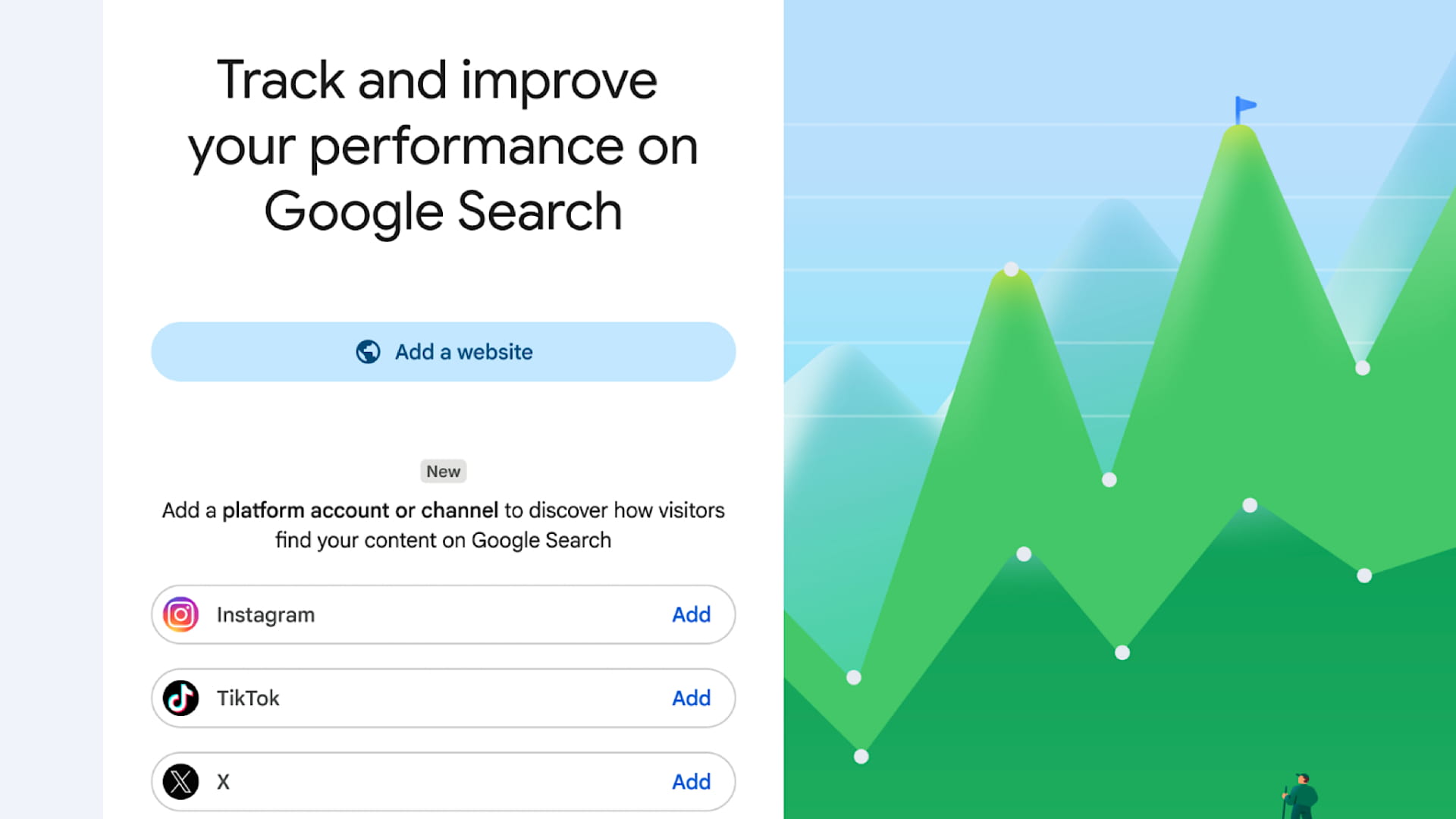
On July 7, Search Console quietly added a new property type called platform properties. Connect one of four accounts, Instagram, TikTok, X, or YouTube, and Google shows you the exact search terms sending people to your posts on Search and Discover. Even if you don’t own a website at all.
Read that last line again. The tool built for site owners now works for people who never built a site, and it’s the clearest sign yet that search visibility has turned into the multi-platform problem behind generative engine optimization.
What actually shipped
A new Search Console property type called platform properties. Posted by Moshe Samet, Product Manager Lead on Search Console.
You pick one of four platforms, Instagram, TikTok, X, or YouTube, add it from the property selector, and follow the onscreen steps to authorize the connection. Then you get three reports:
- Performance: total clicks, impressions, and more, filterable and sortable so you can see which specific posts and queries drive the most traffic. You can export it.
- Insights: a high-level read on your recent traffic trends, your top-performing posts, and how people discover your account on Google.
- Achievements: growth milestones, like passing a new threshold for total clicks in the last 28 days.
The example Google showed was a YouTube creator with 17.8K clicks in 28 days: 13.7K from web search, 3.89K from video search, 233 from Discover, 22 from image search. One creator. One account. Four different Google surfaces feeding it.
It rolls out gradually over the coming weeks, so don’t panic if it isn’t in your account yet.
Why this matters more than it looks
For a decade, Search Console had one rule: you can only see performance for domains and URLs you own and verify. That was the whole model. Your site, your data.
That rule just broke. Google is now handing you performance data for content it doesn’t host and you don’t serve. Which means Google is openly telling you something it has always done quietly: it ranks your off-site content. Your YouTube video, your TikTok, your Instagram post, all of it already shows up in Search and Discover, pulling clicks you were never measuring.
This is the multi-platform visibility shift, on the record. Being findable stopped being one URL a long time ago. It’s now your whole footprint: the pages you own, the profiles you post on, and the off-site mentions that decide whether you get cited by Perplexity and the rest. Google building a dashboard for it is the confirmation, not the cause. The answer, wherever Google assembles it, gets pulled from everywhere you exist, not just your homepage.
The reports are a content brief in disguise
The headline numbers are nice. The per-post query data is the actual gift.
You can now see which specific post pulled search traffic, and the exact query that triggered it. That is a brief someone handed you for free. A TikTok that ranks for “how to read a nutrition label” is telling you the demand exists and that your take on it works. Make five more. A YouTube video quietly pulling Discover traffic is telling you the topic has legs before you commit a whole series to it.
Most people guess at what their audience searches. This closes the guess. Read the winners, find the pattern, repeat the pattern.
What to do this week
Nothing fancy. Four moves.
- Verify the accounts you actually use. No point in tracking a dormant X profile. Connect the one or two platforms where you post real work.
- Find your search-winning posts. Sort Performance by clicks. The posts at the top are your proven formats. That’s your next month of content, already validated.
- Write posts the way you write pages. Lead with the answer. Be specific. Match the question people type, not the phrase you wish they typed. A caption or video title that answers a real query gets surfaced. A clever one that answers nothing doesn’t. This is answer engine optimization applied to a caption box.
- Watch Discover. For social and video, Discover is often the bigger tap than web search. If a post spikes there, that’s Google’s feed algorithm betting on it. Feed it more.
The part nobody’s going to say out loud
This is a measurement tool, not a growth hack. It shows you where you already show up. It does not make you show up. Don’t confuse the dashboard for the work.
And the quieter catch: you are renting this visibility. Every one of those four platforms can change its rules, throttle your reach, or lock the export tomorrow. You don’t own the audience, the algorithm, or the data pipe. That’s the trade you make for their distribution.
So use the reports to sharpen your off-platform game, then send that attention somewhere you own. A site, a list, a place that compounds and can’t be switched off by someone else’s product update. The platforms are the reach. Your own asset is the bank. Play both, and know which is which. If sorting out that split is the part you’d rather not run yourself, that’s exactly the job when you hire an AEO consultant.
The search box stopped being ten blue links a while ago. Now it’s a map of everywhere you exist online, and Google just handed you the legend. The only question left is whether you’re on the map.
Not sure? Open Google, search your name and your category, and read what comes back in the Google AI Overview and the results under it. If your name isn’t in there, that’s the work.
Source: See how content from social and video platforms performs on Google Search, Google Search Central Blog, July 7, 2026.
Common questions,
direct answers.
01 What are platform properties in Google Search Console?
Platform properties are a new Search Console property type, launched July 7, 2026, that let you track how your content on Instagram, TikTok, X, and YouTube performs on Google Search and Discover. You connect an account, verify it, and Search Console reports the clicks, impressions, and search queries sending people to your posts. Unlike domain properties, you don't need to own a website to use them.
02 Which platforms does Search Console support?
Four at launch: Instagram, TikTok, X, and YouTube. You add each one as a separate property from the Search Console property selector, then follow the onscreen steps to securely authorize the connection. Google says the feature rolls out gradually over the coming weeks, so it may not appear in your account immediately.
03 What data do the platform property reports show?
Three reports. Performance shows total clicks, impressions, and additional metrics, filterable by post and query, with an export option. Insights gives a high-level view of recent traffic trends, your top-performing posts, and how people discover your account on Google. Achievements tracks growth milestones like passing a new clicks threshold in the last 28 days.
04 Does this change how I should create social content?
It changes what you can measure, which changes what you double down on. Now that you can see which posts pull search traffic and which queries trigger them, treat your captions, video titles, and opening lines the way you'd treat a page: lead with the answer, be specific, and match the question people actually search. The same answer-first habit that gets a page cited gets a post surfaced.